Client Alert: First SB 253 Report Officially Due in Less Than a Month
/
The first reporting deadline of California’s Climate Corporate Data Accountability Act (SB 253) is November 10, 2026, now less than one month away.
Read MoreKeep up to date with recent company news, press releases, and important regulatory news. This is a hub for readers interested in KERAMIDA’s growth and achievements, as well as relevant global regulatory developments.
The first reporting deadline of California’s Climate Corporate Data Accountability Act (SB 253) is November 10, 2026, now less than one month away.
Read MorePeggy Murphy, Ph.D., Heather Loebner, and Eric Ostern, MBA, join our Senior Advisory Team, bringing more than 75 years of corporate sustainability leadership to our clients.
Read MoreThe EU has finalized its simplified sustainability reporting standards. Commission Delegated Regulation (EU) 2026/1563 was published on September 21, replacing the existing ESRS annexes, and enters into force on November 10, 2026. The revised standards cut mandatory datapoints by over 60%.
EU companies and non-EU issuers with more than 1,000 employees on average and over 450 million in net turnover remain in CSRD scope. The first CSRD reports are expected in 2028 and should cover FY 2027.
Non-EU companies exceeding 450 million(euros) net turnover generated in the EU and having at least one EU subsidiary or branch with over 200 million(euros) net turnover will report under ESRS-40a (currently in draft, anticipated to be published January 2027), with first reports due in 2029, expected to cover FY 2028.
The revised ESRS applies to financial years beginning with January 1, 2027. The first report comes in 2028, but the data behind it starts on January 1. First-time reporters don’t need prior-year comparatives in year one, but FY 2027 data become the baseline. Emissions, workforce, and value chain data need consistent methods, boundaries, and controls from the start of the year.
No comparative information is required in the first reporting year.
Biodiversity (E5) and the value chain workers, affected communities, and consumers standards (S2 to S4) can be omitted for the first two years.
Most anticipated financial effects are also phased in over two to four years.
Starting in FY 2027, in-scope companies cannot require value chain partners with an average of 1,000 employees or fewer, including non-EU suppliers, to provide information beyond the short list of essential ESG data points in Annex II of the EU’s Voluntary Standard (Delegated Regulation (EU 2026/1560). Supplier data requests for 2027 should be designed around this limit.
Companies already reporting under the existing ESRS may choose between:
The existing ESRS
The ESRS, supplemented by eight specific reliefs from the revised standards
The Revised ESRS in full
Companies must state in their sustainability statement which version they applied.
Confirming whether your organization is in scope under the new thresholds.
Performing and refreshing Double Materiality Assessments against the revised standards.
Collecting, managing, and mapping data against EFRAG’s revised list of data points with a Gap Assessment and Implementation Roadmap.
Supporting companies in closing gaps in the Roadmap with additional sustainability services such as GHG Inventories, ESG training, etc.
New funding opportunities continue to become available for climate action, sustainability, resilience, infrastructure, and community-focused projects. At the same time, application windows, eligibility requirements, and available funding can vary significantly by program.
KERAMIDA's team tracks federal, state, and regional funding opportunities to help keep clients informed of programs that may support current or planned projects. Below are several opportunities to be aware of, including upcoming application deadlines and programs that remain open on a rolling or ongoing basis.
Questions about an opportunity below? KERAMIDA's team is available to help determine how a program may apply to your project. Talk to our team.
KERAMIDA recently attended the 2026 Midwest US-Japan Association Conference. The annual event serves as the principal forum on the growth of bilateral trade and investment between the Midwest and Japan, celebrating over 50 years of US/Japan relations.
Read MoreThis year, four KERAMIDA leaders completed ADVISA's Leadership Fundamentals program, which focuses on developing skills in self-awareness, communication, hard conversations, team dynamics, driving results, and leading through change. This month, they graduated.
Read MoreAt our latest team-building event, organized by Vanessa Santiago, HR Manager, KERAMIDA staff went head-to-head in an apple-peeling contest, an ice cream sundae-building challenge, and the classic tallest spaghetti tower, built from nothing but dry spaghetti, tape, string, and a marshmallow. The scores stayed close throughout. Read the full recap and see who took home the win.
Read MoreOn August 26, 2026, KERAMIDA welcomed clients, friends, and colleagues to our Indianapolis headquarters for our annual “Day at the Park” Environmental, Health & Safety, and Sustainability Conference.
Read More
On September 1, 2026, The California Air Resources Board (CARB) released multiple resources for the CARB proposed November 10, 2026 greenhouse gas (GHG) emissions reporting deadline, required by Senate Bill (SB) 253. The key update is the introduction of two submittal options for 2026 reporting: a new voluntary Report Intake Platform, and the ability to submit reports and contact information via email.
New CARB Resources
A voluntary 2026 Report Intake Platform that entities may choose to use. Use of this platform is not mandatory. Entities may also email emissions reports and contact information to climatedisclosure@arb.ca.gov.
A video tutorial of the voluntary report intake platform
Acceptable Reporting Formats for 2026
Entities may satisfy their 2026 reporting obligation by:
Submitting an existing annual report that includes Scope 1 and Scope 2 GHG emissions.
Submitting existing Scope 1 and Scope 2 data already reported to other programs or voluntary initiatives.
Using CARB’s Draft Scope 1 and Scope 2 GHG Reporting Template for reporting Scope 1 and Scope 2 data.
Submitting a statement of non-reporting (on company letterhead) if the entity was not collecting, and was not planning to collect, Scope 1 and Scope 2 data as of December 5, 2024, when the Enforcement Notice was issued.
Emissions reports, non-reporting statements, and contact information may be submitted via the voluntary 2026 Report Intake Platform or emailed to climatedisclosure@arb.ca.gov. All emission reports or statements of non-reporting will be made public.
Key Clarifications
Minimum reporting scope: For 2026, reporting entities submitting reports are only required to provide their annual Scope 1 and Scope 2 emissions. Additional details – methodology descriptions, data sources, global warming potential (GWP) values, emission factors, organizational boundaries, disaggregated emissions data by category and gas, and any assumptions used – are optional, not required.
Reporting template is voluntary: CARB’s Draft Scope 1 and Scope 2 GHG Reporting Template, posted on October 10, 2025, may be used, but its use is not mandatory for this cycle.
CARB will still accept submissions whether or not assurance has been obtained for the 2026 cycle.
CARB is currently developing the reporting requirements for 2027, and this guidance only applies to the 2026 reporting cycle.

Contact Erica at: eskowron@keramida.com
KERAMIDA is pleased to welcome Mike Lancioni as President. With more than 35 years of executive leadership experience, including his role as President of Cardno's $250M Science & Environment Division, Mr. Lancioni brings a proven record of driving strategic growth and organizational performance to KERAMIDA.
Read MoreKERAMIDA is pleased to share two significant updates within our Safety & Industrial Health Services team. Dan Engling, CIH, CSP, MS, transitions to Senior Technical Advisor, bringing his expertise to a new capacity within KERAMIDA, while Carson Brown, CSP, steps into the Senior Vice President role.
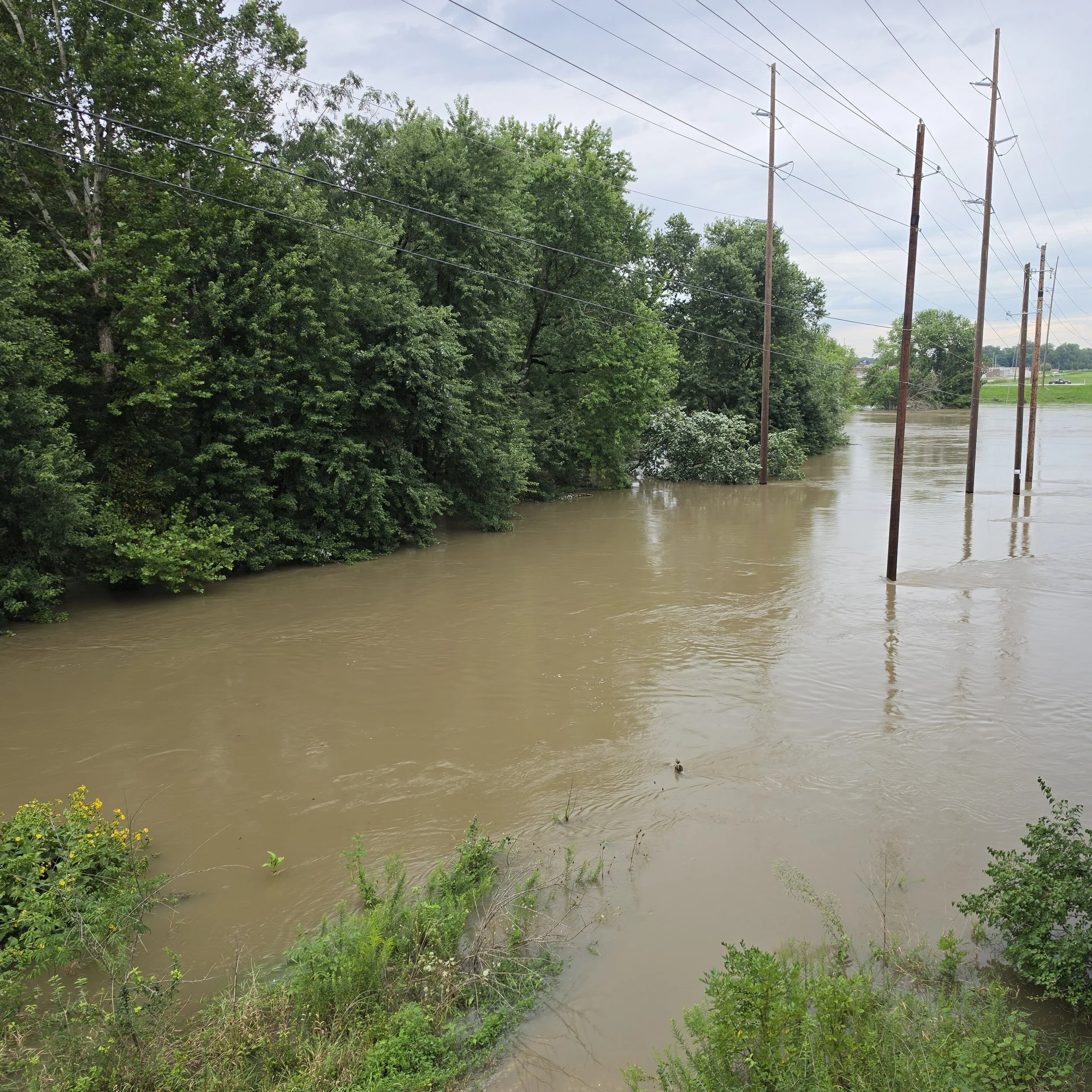
Read MoreHistoric flooding across Indiana raises mold risk fast. Learn what to salvage, what to remove, and how to protect your property before remediation.
Read MoreSara Burriss has stepped into an expanded role leading KERAMIDA's event program from strategy through execution, including CRM administration, business development operations, and industry association representation. A former Client Communications Manager, Sara recently completed her Bachelor of Science in Business Administration with a focus in Marketing.
Read MoreRead this Client Alert on GHG Protocol and ISO's plan to merge into a single global carbon accounting standard. This update also covers results from the Scope 2 public consultation and early feedback on the new Actions and Market Instruments (AMI) reporting proposal. Here's what it could mean for your company's GHG reporting going forward.
Read MoreKERAMIDA is delighted to congratulate Donald Ning, PE, MS. Eng, MBA, Senior Engineering & Compliance Manager, on passing the Professional Engineer (PE) Certification Exam.
Read MoreOn July 9, KERAMIDA was proud to sponsor the USGBC Indiana Women in Green: Resilient by Design event in Indianapolis, where our Vice President of Sustainability Strategy & Reporting, Emilee O'Neill, joined a distinguished panel of industry leaders to discuss what resilience means in the work we do.
Read MoreDuring the July 21, 2026 workshop, CARB provided updates on the 2026 initial regulation as well as updates to proposed rulemaking concepts for 2027. Read this Client Alert for a summary of the most important developments.
Read MoreKERAMIDA is conducting a short research survey to understand how organizations are evolving their supplier engagement practices, covering data collection, performance improvement, risk management, and collaboration.
Read MoreStatute Update
Senate Enrolled Act (SEA) 277 took effect on July 1, 2026, introducing new statutory requirements for petroleum underground storage tank (UST) corrective action in Indiana. On the same day, the Indiana Department of Environmental Management (IDEM) issued a clarification letter explaining how it will implement one of the law's most significant provisions, addressing the very ambiguity KERAMIDA had raised.
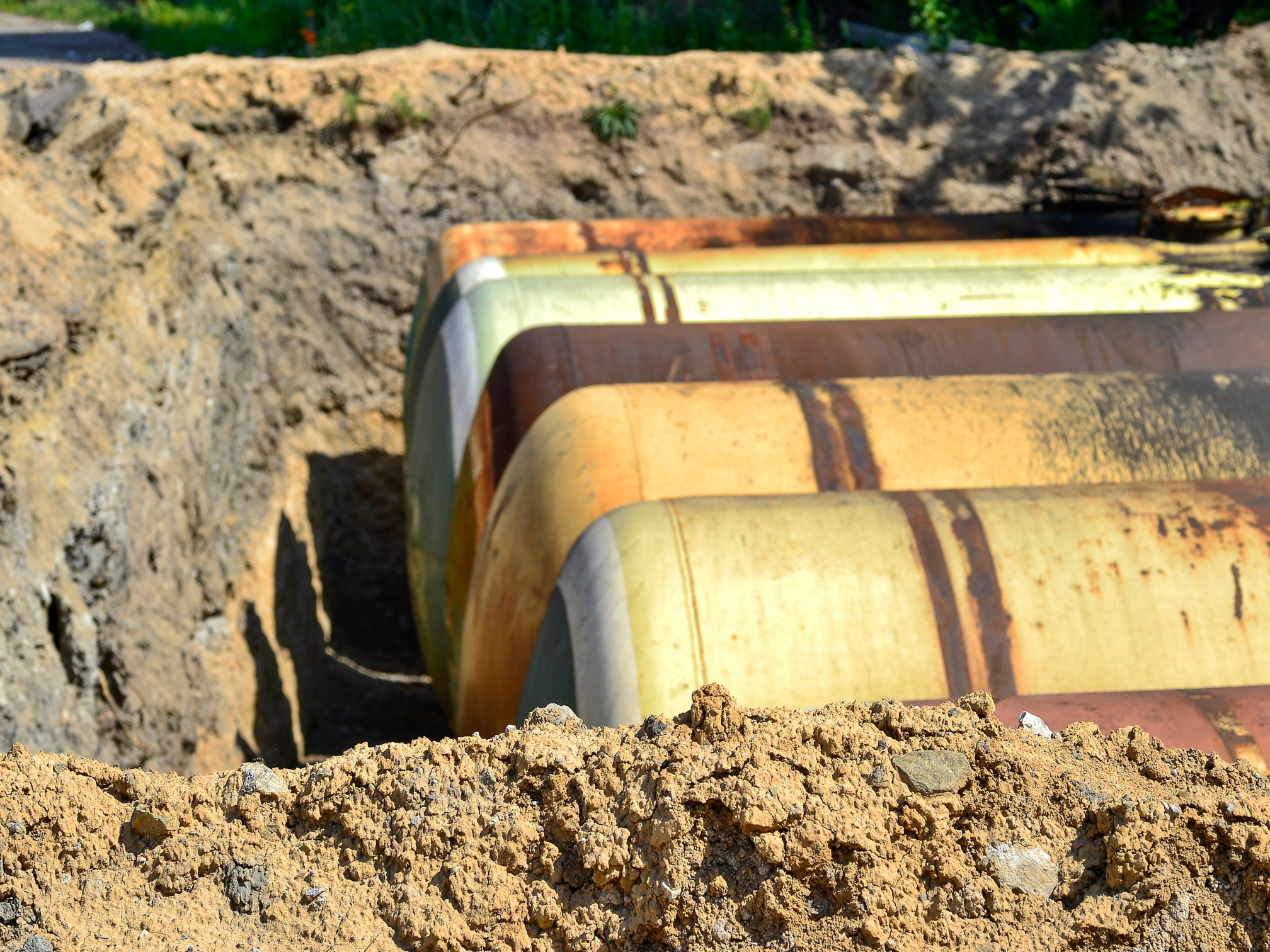
Earlier this year, KERAMIDA's Lauren Nielsen, P.E., Senior Engineer, Land Services, testified before the House Environmental Affairs Committee of the Indiana General Assembly regarding Indiana SEA 277. During her testimony, Lauren highlighted the need for greater clarity around the legislation's use of the term "reportable quantity" for petroleum releases, noting that petroleum is excluded from the federal hazardous substance definitions referenced elsewhere in the statute. She continued those discussions with IDEM representatives, environmental attorneys, and other stakeholders as implementation moved forward. IDEM's July 1 clarification letter speaks directly to the point KERAMIDA identified.
Under SEA 277, IDEM cannot issue a No Further Action (NFA) determination, approve closure, or request certain institutional controls unless the commissioner has received and reviewed an evaluation of potential remedies. That requirement is triggered whenever a "reportable quantity" of released petroleum remains or may remain underground at a site.
As IDEM acknowledges, the term "reportable quantity" is not defined for petroleum USTs. Working with the statute as written, the agency has taken a practical approach: it will look to the federal UST rule at 40 CFR 280.53, which addresses reporting of petroleum spills exceeding 25 gallons, for interpretive guidance. Because it is often not feasible to quantify how much petroleum was actually released, IDEM will treat any petroleum release-related chemical (RRC) remaining above its Risk-based Closure Guide (the "R2," a nonrule policy document) Published Levels as triggering the requirement to submit an evaluation of closure options, environmental deed restrictions, and remediation methods, together with estimated costs and timeframes.
IDEM has also updated State Form #55439 and State Form #55441 to reflect the new statutory requirements, a welcome development. Prior versions required the certifying environmental professional to attest that submittals complied with 329 IAC 9-5-5.1 and 329 IAC 9-5-6, sections that were repealed in 2023 and replaced by incorporation of the federal 40 CFR Part 280 requirements. The updated forms resolve a real practical problem for the professionals who sign these submittals. Copies are available on the IDEM forms page.
KERAMIDA advocated during the legislative session for a clear definition of "reportable quantity." That clarity was not written into the statute, but the requirement is now law. Importantly, though, a requirement to evaluate potential remedies is not a mandate to implement them. IDEM's own R2 is built around determining whether a remedy is actually necessary to control an unacceptable risk to human health or the environment, and under that framework, remedies are selected only where warranted. An exceedance of a generic, published screening level is the starting point for a risk evaluation, not the conclusion of one.
That distinction matters for clients. A broad evaluation requirement could tempt some consultants to recommend extensive investigation, monitoring, and active cleanup that site conditions do not justify. KERAMIDA takes the opposite approach. We apply the best available science to determine whether corrective action is genuinely necessary, recognizing that it is warranted only when a release currently poses, or will foreseeably pose, an unacceptable risk. In many cases, natural source zone depletion (NSZD), which is the natural biodegradation, dissolution, and volatilization that steadily reduces petroleum in the subsurface, removes contaminant mass at rates that meet or exceed engineered remediation, and the Interstate Technology and Regulatory Council (ITRC) recognizes it as a legitimate stand-alone or supporting remedy where exposure risks are controlled. Where natural attenuation processes such as NSZD will achieve remediation objectives within an acceptable timeframe, aggressive engineered systems are often neither necessary nor the most sustainable option.
For petroleum UST owners, operators, consultants, and contractors, IDEM's clarification offers valuable insight into the agency's expectations under the new law and the additional information that may now be required before site closure. It also raises the stakes on choosing a consultant who scopes work to actual risk. Performing investigation, monitoring, and remediation at a site that does not need it will not only delay closure but can also needlessly draw down the Excess Liability Trust Fund (ELTF), the state fund that reimburses eligible corrective-action costs. Clients who want their obligations met efficiently and their ELTF resources conserved are well served by a risk-based approach grounded in sound science.
KERAMIDA remains committed to helping clients navigate evolving environmental requirements through technical expertise, regulatory and legislative engagement, and practical implementation strategies. Lauren's testimony and continued engagement with stakeholders reflect KERAMIDA's commitment to advancing clarity for the benefit of our clients and to ensuring that corrective action is driven by what the environment and the client actually need.

Contact Lauren at: lnielsen@keramida.com
KERAMIDA is pleased to welcome Jeet Radia, P.E., CIH as Senior Vice President. Mr. Radia brings more than four decades of experience helping industrial and manufacturing clients address complex environmental, health, and safety (EHS) challenges.
Read MoreKERAMIDA is a global, multidisciplinary Sustainability and EHS consulting firm grounded in evidence-based research and development. Founded in 1988 by Dr. Vicky Keramida, our engineers, scientists, and technical experts advise financial institutions, industry, businesses, and governments worldwide on strategy, implementation, compliance, reporting, training, community engagement, and assurance. With offices and professionals based throughout the U.S., we provide comprehensive environmental compliance, health & safety, sustainability, and engineering services for clients worldwide.


401 North College Avenue, Indianapolis, IN 46202
(800) 508-8034 | (317) 685-6600
home | services | projects | news | insights | sustainability | careers | contact us
© 2026 KERAMIDA Inc. All Rights Reserved.
Privacy Policy