

PFAS Vapor Intrusion: Science, Data Gaps, and What It Means for Site Liability
/Definition
What is PFAS vapor intrusion?
Vapor intrusion is the process by which contaminants in subsurface soil or groundwater migrate upward into indoor air. It is a well-understood issue for petroleum hydrocarbons and chlorinated solvents. For most PFAS, including PFOA and PFOS, it has not traditionally been a concern because those compounds are largely non-volatile. But PFAS is a large family of chemicals, and a subset, including short-chain species and fluorotelomer alcohols (FTOHs), do have sufficient vapor pressure to volatilize. Whether those species can complete a full pathway to indoor air, and at what concentrations, is still being studied.

Over the past several years, PFAS has been one of the hottest topics of conversation among environmental consultants and lawyers, not to mention wastewater treatment operators, firefighters, and those who work at chemical facilities, airport facilities, landfills, and drinking water plants. The far-reaching and ubiquitous effects of PFAS are also felt in agriculture and real estate, where the application of biosolids to land has become an important consideration.
PFOA and PFOS were designated as CERCLA hazardous substances in July 2024, and the EPA confirmed in September 2025 that it will retain that designation. For legal teams advising clients on PFAS-impacted sites, that changes the landscape. Vapor intrusion is one of the less-examined exposure pathways in PFAS site work, and it is worth understanding what we know and what we do not.
Which PFAS Species Are Volatile?
Many of the most widely discussed PFAS, such as PFOA and PFOS, are believed to reside in the vadose zone; they tend to partition at the air-water interface. However, PFAS is a large class of chemicals, with thousands of compounds that vary in properties. While PFAS are typically thought of as non-volatile contaminants, a subset is volatile or semi-volatile. These groups include ultrashort-chain PFAS and fluorotelomer alcohols (FTOH).
While Maximum Contaminant Level (MCL)-regulated drinking water contaminants, PFOA and PFOS, might not have sufficient vapor pressure to volatilize, short-chain and FTOH PFAS species do.
Interestingly, long-chain PFAS like PFOA and PFOS were generally associated with particulates if airborne, while FTOHs were almost always associated with the vapor phase. So while PFOA, PFOS, and other long-chain PFAS can be found in the air, other species are truly present as vapor. Other PFAS species associated with low vapor pressure and potential volatility include sulfonamides (FASAs) and sulfonamide ethanol (FASEs).
What Does the EPA Currently Say?
In 2023, research completed by the EPA states: "The vapor intrusion of volatile PFAS… should, therefore, warrant consideration during vapor intrusion assessments at facilities where high concentrations are present in shallow soils and groundwater." While the research states this, there is no examination of what constitutes an amount "high" enough to warrant investigation for volatilized PFAS.
The above shows that the EPA is not ignoring the possibility of PFAS vapor intrusion; it is on their radar. But this is mostly taking place at the research and early guidance stage and has not yet progressed to regulatory action.
There has been plenty of research showing that PFAS can exist in air, soil gas, landfill gas, and sub-slab vapor. But what has yet to be demonstrated is a complete vapor intrusion pathway from the subsurface source through soil vapor to indoor air, resulting in exposure to people. It is thought that many detections of PFAS in air largely originate from background sources such as carpets, fabric treatments, industrial emissions, and landfills or sites that have had discharges of PFAS foam (AFFF).
The mass flux of fluorine emitted from landfills as gas should not be underestimated. One study found that the mass of fluorine leaving landfills as gas was comparable to or greater than the mass leaving as leachate. The primary fluorine landfill gas is the aforementioned FTOHs.
EPA's vapor intrusion research program continues to evolve, and the agency has signaled that PFAS vapor pathways are an active area of investigation.
The Data Gaps That Create Legal Uncertainty
PFAS, as vapor-forming compounds, remain a relatively unknown subject. A key missing piece of the puzzle is toxicity data. Regulators still don't know how toxic inhalation of these compounds can be. There are no EPA inhalation toxicity values for PFAS, nor any federal indoor air screening levels. Hawaii has established interim screening levels for PFAS in indoor air, but because information is limited, it does not currently require vapor intrusion assessments for PFAS.
For attorneys advising clients on PFAS-impacted sites, this is a meaningful gap. There is currently no federal benchmark for what level of PFAS in indoor air is considered a risk.
Additionally, sampling methods are not standardized. Air sampling methods like TO-17 have been modified to sample for PFAS. But there are currently no widely adopted EPA-approved or VI-specific standard methods for assessing PFAS vapor intrusion in indoor air. There is also the potential for interference from background sources. Establishing a baseline for background interference has not been clearly defined.
Further, given the vast number of PFAS species, there is still limited data on the various PFAS vapor pressures. Therefore, determining how many PFAS species, or which PFAS species, are truly volatile remains uncertain.
The ITRC PFAS Vapor Intrusion Fact Sheet (December 2025) provides the most current technical summary of these data gaps and is a useful starting point for anyone working through these questions.
What This Means for Site Assessments and Liability
PFAS concerns have become incorporated into our Phase I scope, per the ASTM standard. While we address these concerns in Phase I reports, some soil and water sampling for PFAS has occurred. PFAS, as a vapor-intrusion concern, has not yet been directly investigated. We recommend reviewing each site on a case-by-case basis to determine whether a PFAS vapor intrusion threat warrants investigation, given the right factors. Some sectors would be more likely to require a more critical approach: notably airports, landfills, military bases, and fire stations. The prudent approach right now is to be cautious without overextending investigative requirements in the absence of clear federal standards.
Looking Ahead
As with many aspects of PFAS and its regulatory landscape, we are still in an early and uncertain stage. PFAS vapor intrusion is scientifically plausible and actively being researched, but it has yet to be clearly demonstrated or regulated. The future will depend on better toxicity data, improved sampling methods, and more scientific research.
For legal teams and EHS professionals, the prudent approach is to treat this as a developing risk and document consideration of the vapor pathway now, rather than wait for regulations that are likely to follow.
KERAMIDA's vapor intrusion testing and remediation practice and environmental due diligence services are available to support legal teams and site owners navigating these emerging questions. If you have questions about how PFAS vapor intrusion may affect your site or your client's case, contact us or call (800) 508-8034.
Author

John Young, MS
Senior Project Manager, Land Services
KERAMIDA Inc.
Contact John at jyoung@keramida.com
Related Services

KERAMIDA is full-service environmental consulting firm with decades of Due Diligence experience performing Phase I & Phase II environmental site assessments and remediation services. Minimize risk and protect yourself from liability in any commercial real estate transaction where potential environmental risks are a concern.
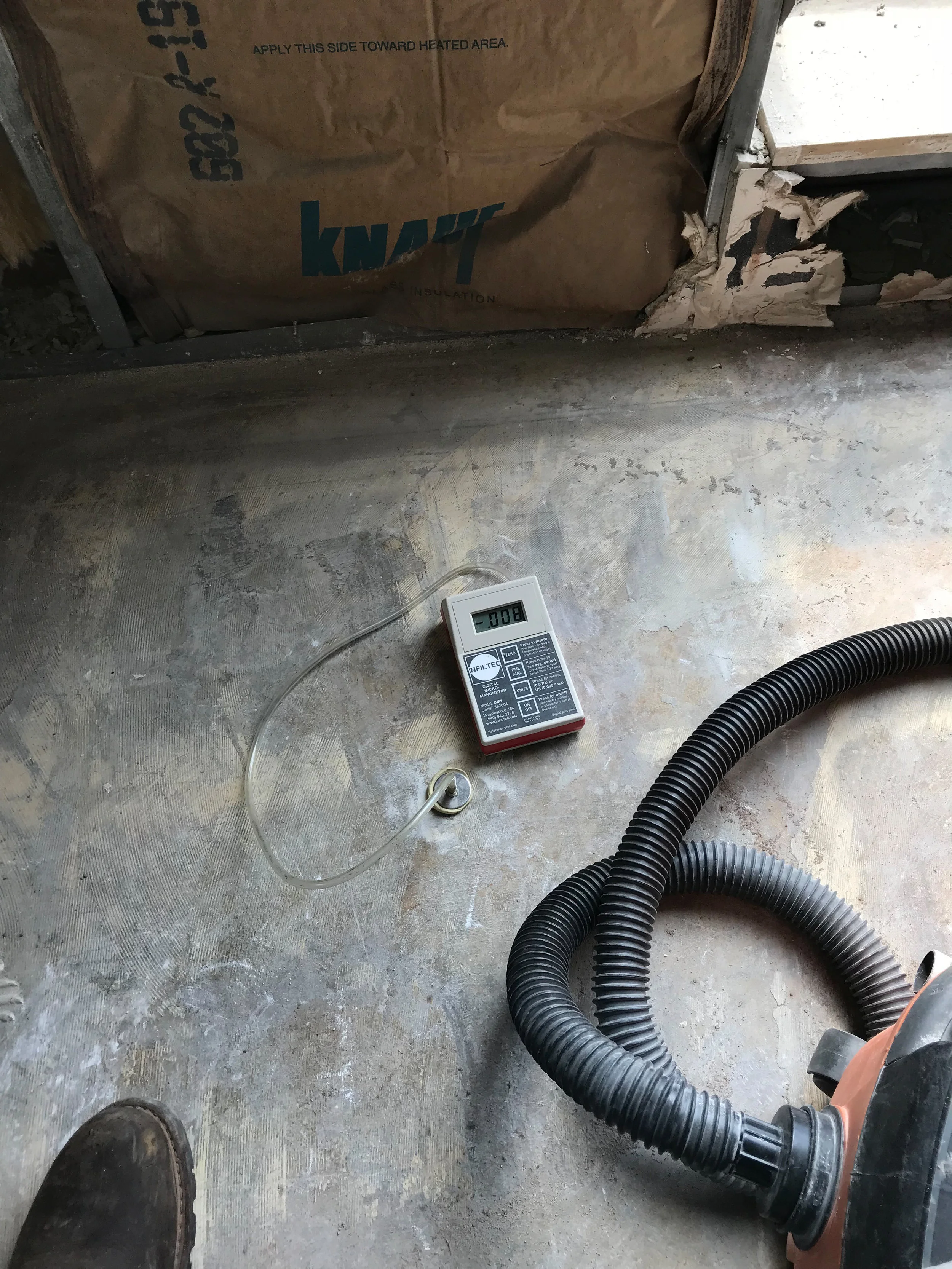
KERAMIDA offers comprehensive vapor intrusion services from initial assessment through mitigation design and installation for both commercial and residential buildings. Our vapor intrusion professionals are experts in VI testing, mitigation, and sub-slab vapor remediation in all types of buildings and foundations.



